We're working with the University of Nottingham to investigate how encapsulation technology could help people who have lost their sense of smell or taste.
Losing your sense of smell (Anosmia) and taste (Ageusia) is more common than you may think. Globally, 900 million people suffered loss of smell or taste in 2015, and a predicted 1 in 6 people aged 65+ will be affected by 2050. The number has increased significantly due to the Covid-19 virus, involving vast numbers of people of all age groups.
TasteTech is working with Dr Nicole Yang, an Assistant Professor in International Flavour Group at the University of Nottingham, and her PhD student Jing Feng. They will carry out a four-year study into how encapsulated ingredients in chewing gum could help stimulate these senses. They hope to discover how to aid a more effective recovery.
Losing your senses
Most people are lucky enough to take smell and taste for granted, but our senses connect us to the world. Reducing sensory input can lead to malnutrition, weight loss, food poisoning, depression, and other issues.
As it is one of the effects of Covid-19, the recent pandemic has brought mainstream attention to the issue. People of all ages have suffered a loss of smell or taste, as well as processes known as chemesthesis. These chemically initiated sensations occur via the touch system. Examples include the burn of capsaicinoids in chillies, the cooling of menthol in peppermint, and the tingle of carbonation in a fizzy drink.

Developing a new training system
The current smell training system for sufferers with loss of smell or taste uses essential oils to trigger a response. However, this is designed to trigger a smell response, and the scent does not last particularly long. The study will attempt to develop a robust multimodal system to stimulate smell, taste and trigeminal sensations over time. We will use ingredients such as menthol (cooling) or capsaicin (heat) to help retrain sufferers’ senses.
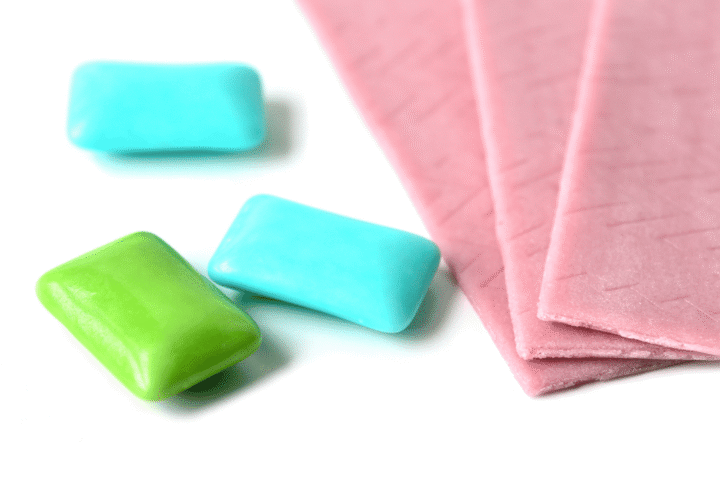
Dr Yang has proposed chewing gum as the perfect application as it stays in the mouth for an extended time. TasteTech will design encapsulated ingredients that are ideally suited to the task. The encapsulation technology helps delay the release of ingredients, so their effects last throughout the chew time. The proposed project successfully secured a PhD position via the Doctoral Training Programme (DTP) at the University of Nottingham, and Jing joined the team as a research student.
Jing Feng, the researcher carrying out the study, had this to say:
“As a researcher in food science, I am well aware of the importance of the sense of odour and taste and how losing them could have a huge impact on the quality of life. When I heard my friend’s story and read about people losing the sense of smell and taste after COVID, of how their coffees taste like sewage, how they have to add a lot more seasoning just to make the beef stew tastes like before, I decided to do something with that. I am lucky to be part of this project, where we try our best to alleviate the pain of suffering and the fear of being suffered. So far, we identified chewing gum as a potential tool, as it stimulates olfaction, gustation and trigeminal sensations. The encapsulation of ingredients is regarded as a very promising technique to longer the flavour of chewing gum.”

Multidisciplinary research team
This project has a strong collaborative research team to support Jing, including four academics at the University of Nottingham:
Step by step
To achieve this goal of developing a robust smell and taste training system, the research team will deliver the project in three steps:
- Design gum – Using data gathered from panel and instrument testing the sensory profile of ingredients to design the ideal gum.
- Analysis – Analyse the effectiveness of the gum and work with sufferers to tweak the sensory profile and optimise the effect.
- Training system – develop a training system to go with the gum
Every step will be led by data and analysis, leading to a proven and effective system.
More to come
This blog is just the first on this long term project. We will be sharing different aspects of the study, so keep an eye on the TasteTech blog for updates.
If you have any questions about this study, please get in touch or follow this link to learn more about our encapsulated ingredients for chewing gum.
If you are interested in knowing more about various research activities and opportunities at the International Flavour Research Group at the University of Nottingham, please follow them via their social media links (Twitter, LinkedIn).